Project About
Architectural Concept Statement (Revised)
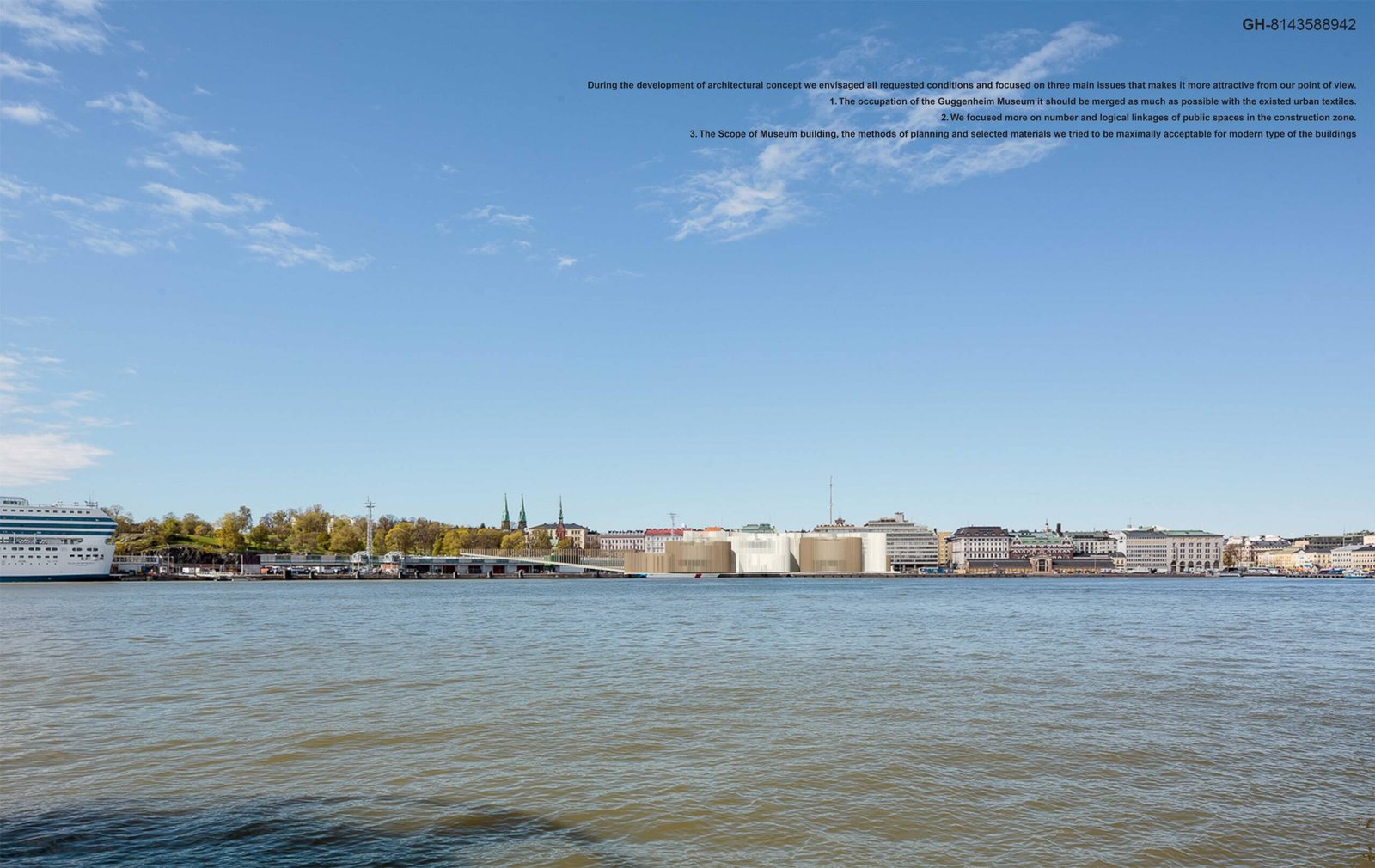
During the development of the architectural concept, we carefully considered all requested conditions and focused on three key issues that, from our perspective, make the proposal more attractive and contextually appropriate:
- Urban Integration
Taking into account the function and significance of the Guggenheim Museum, the building should merge as much as possible with the existing urban fabric and surrounding city structure. - Public Space Network
Special emphasis was placed on the number of public spaces within the construction zone and on creating logical and functional connections between them. - Contemporary Architectural Approach
The scale of the museum, its planning strategies, and the selected materials were designed to be максимально acceptable and relevant for contemporary architectural standards.
Connection to the Urban Environment and Landscape
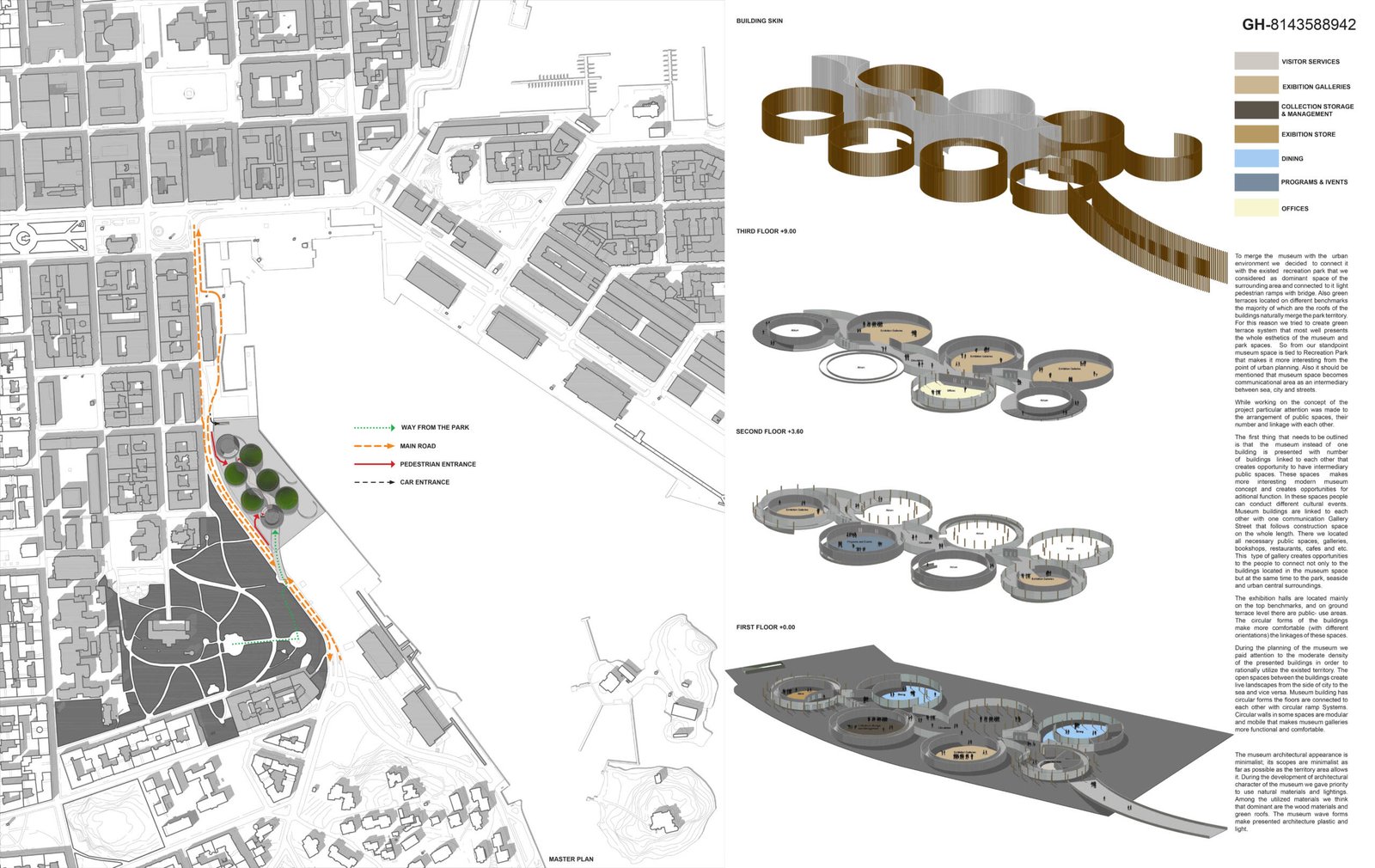
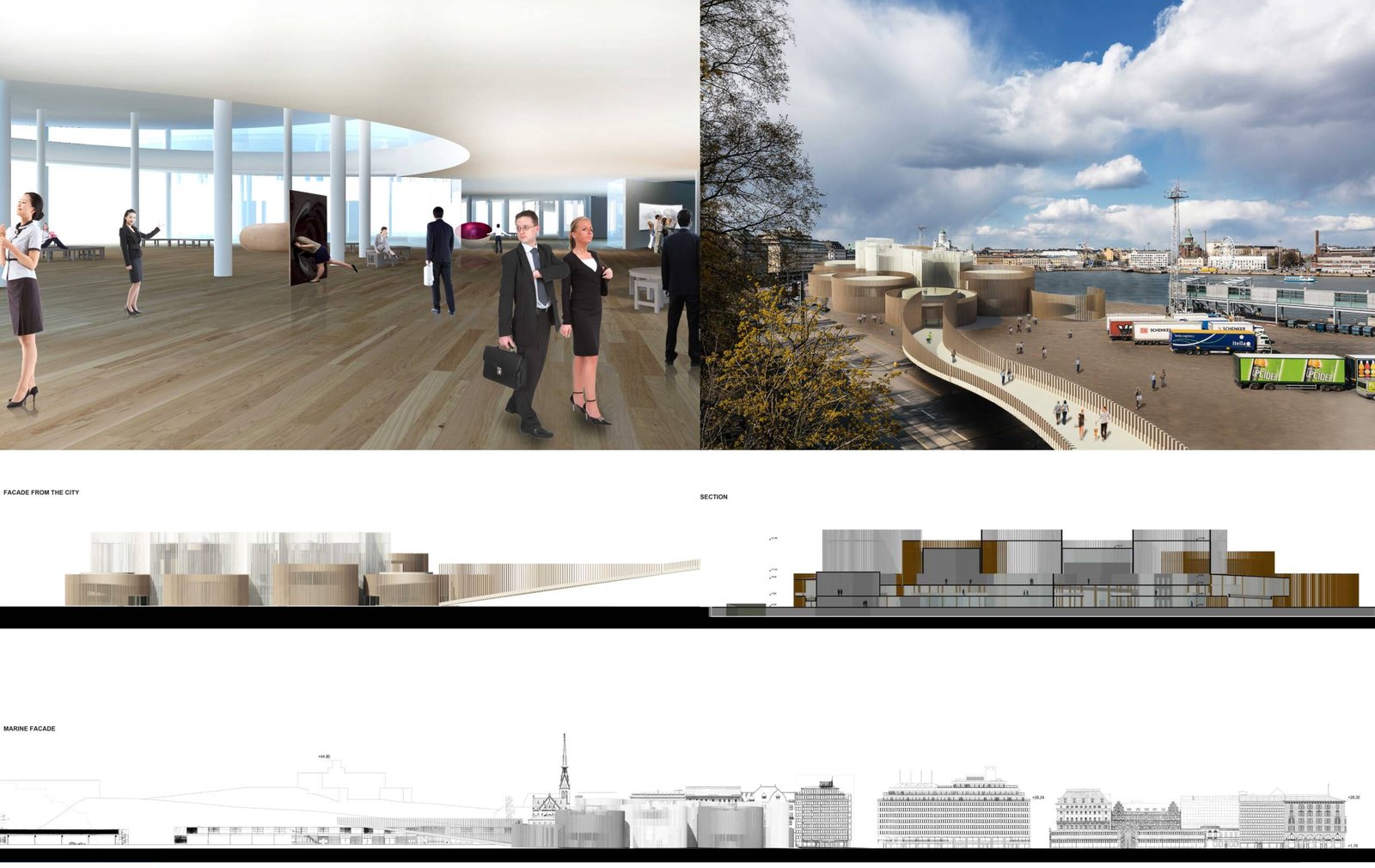
In order to integrate the museum into its urban surroundings, we considered the existing recreational park as the dominant spatial element of the area. The museum is connected to this park through light pedestrian ramps and bridge-like structures. In addition, green terraces are located at different levels throughout the complex, many of which are designed as roof gardens. These terraces naturally extend the park territory into the museum environment.
For this reason, we developed a continuous system of green terraces that best represents the aesthetic unity of both museum and landscape. In this concept, the museum becomes a communicational intermediary space connecting the sea, the city, and the surrounding streets.
Public Spaces and Functional Linkages
Particular attention was given to the arrangement, diversity, and connectivity of public spaces.
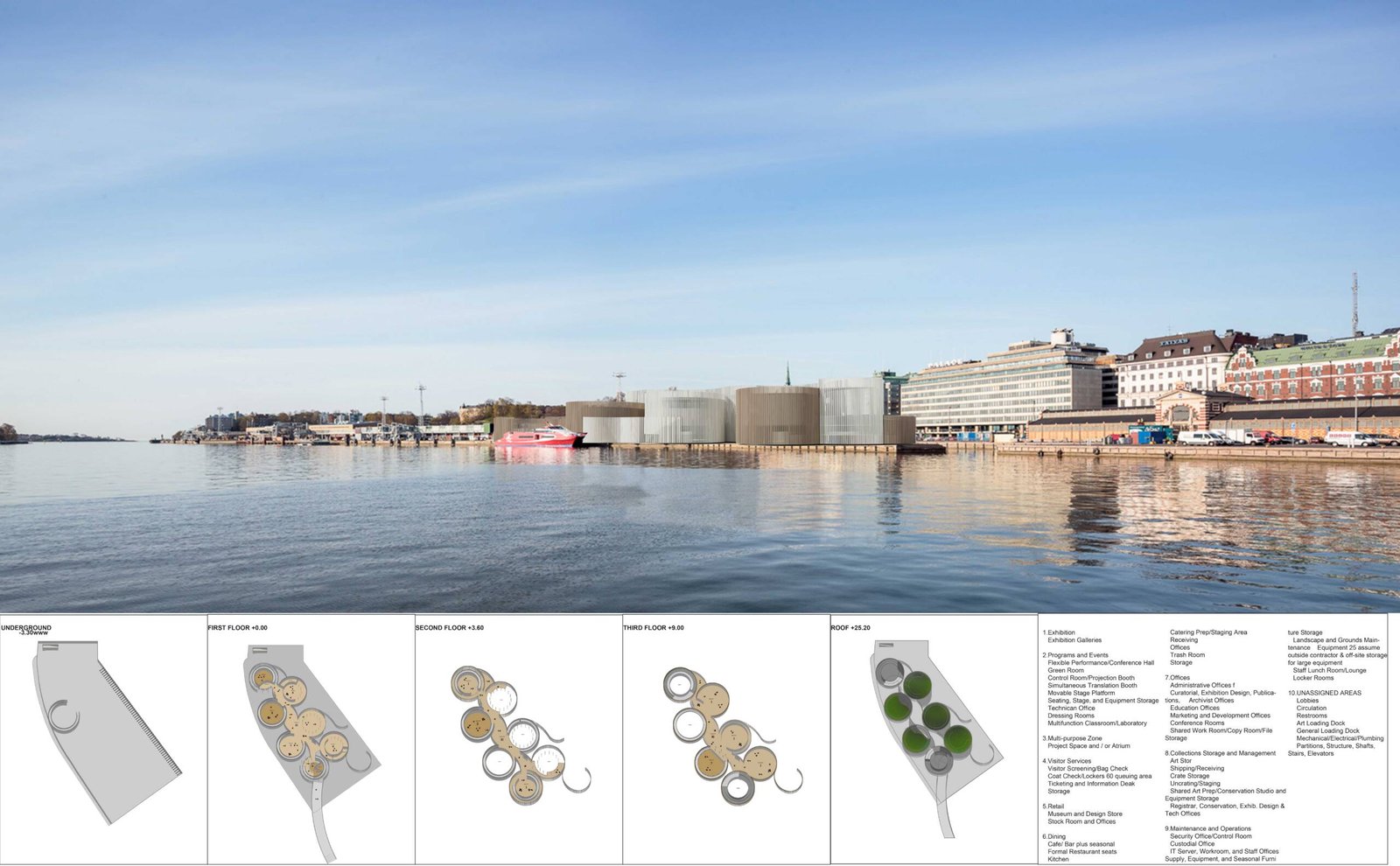
One of the main principles of the project is that the museum is not presented as a single monolithic building, but rather as a composition of several interconnected volumes. This approach creates multiple intermediary public spaces between the structures, enriching the visitor experience and supporting a more contemporary museum concept.
These public spaces provide opportunities for additional cultural functions, such as:
- outdoor exhibitions
- performances
- festivals
- public gatherings and events
All museum buildings are connected through a central communication spine — a Gallery Street — which extends along the entire length of the site. Along this internal public axis, we located the necessary social and cultural functions, including galleries, bookshops, restaurants, cafés, and other visitor-oriented facilities.
This type of spatial organization allows people not only to move between museum buildings but also to remain visually and physically connected to the park, the seaside, and the urban surroundings.
Spatial Organization and Exhibition Strategy
The exhibition halls are located mainly on the upper levels of the site, while the ground and terrace levels contain the most active public-use areas. The circular forms of the buildings provide comfortable spatial orientation and create smooth connections between interior and exterior zones.
During the planning process, we maintained a moderate building density in order to utilize the existing territory rationally. Open spaces between the volumes create live visual landscapes from the city toward the sea and vice versa.
The circular architectural geometry is reinforced through a system of internal ramps, which connect the floors in a continuous movement sequence. In some areas, circular walls are designed as modular and mobile elements, making the gallery spaces more flexible, functional, and adaptable for different exhibition formats.
Architectural Character and Materiality
The architectural appearance of the museum is intentionally minimalist. The building volumes remain as restrained as possible within the limits of the site. In developing the architectural character of the museum, we prioritized the use of natural materials and carefully designed lighting.
Among the dominant materials, we emphasize:
- wood cladding
- green roof systems
- natural textures integrated into the landscape
The wave-like forms of the museum give the architecture a plastic, light, and dynamic character, creating a contemporary identity while remaining harmoniously connected to nature.