
Project About
This family house is located in Tskneti, west of Tbilisi, in an historically established summer cottage area that has long been recognized for its outstanding natural beauty and mild mountain climate. Tskneti has traditionally served as a retreat from the city, valued for its dense pine forests, fresh air, and panoramic views toward the surrounding valleys and mountain ranges. Within this unique landscape, the house is carefully positioned to respond to both the topography of the site and the exceptional natural scenery that defines the region.
The two-storey residence is set on a terraced plot of land, a characteristic feature of the area’s steep terrain. The building occupies a site that opens toward the north, facing uninterrupted views of the Caucasus Mountains. This orientation plays a central role in the architectural concept, as the main living spaces are arranged to maximize the visual connection with the distant peaks and the lush greenery of the valley below. Rather than functioning as an isolated object, the house is conceived as part of its environment, integrating architecture and landscape into a cohesive residential experience.
One of the defining spatial features of the residence is its organization around two distinct yards, each offering a different atmosphere and relationship to nature. The first yard is located on the street side and serves as the primary entrance zone. This large outdoor space is densely filled with mature pine trees, creating a shaded, forest-like setting that provides privacy and a sense of calm separation from the public street. The entrance to the building is situated here, allowing residents and visitors to approach the house through a natural landscape rather than a purely constructed forecourt. The presence of the trees enhances the character of arrival, making the transition from the outside world into the domestic environment gradual and serene.
The second yard is positioned approximately three meters below the 0.00 level of the main floor, forming a lower terrace that opens into a green meadow-like surface. In contrast to the wooded character of the upper yard, this lower outdoor area is more open and expansive, creating a softer landscape defined by grass and unobstructed light. This difference in level not only reflects the terraced nature of the site but also establishes a layered outdoor experience, where each yard provides a distinct spatial quality and function.
The interior layout of the house is directly shaped by these outdoor conditions. The main living spaces—including the common areas, kitchen, and primary rooms of daily activity—are oriented toward the Caucasus Mountains. Large openings frame the views, allowing the dramatic landscape to become a constant visual presence within the home. From these spaces, residents can enjoy valley panoramas and changing seasonal atmospheres, reinforcing the close relationship between interior life and the natural environment.
Auxiliary rooms and secondary functions are located deeper within the structure, opening onto a smaller yard area that provides a more intimate and protected outdoor connection. This arrangement creates a clear hierarchy between public and private zones of the house, while ensuring that all areas maintain some form of relationship with the surrounding landscape. The differing characters of the two yards—one shaded and wooded, the other open and meadow-like—offer varied opportunities for outdoor living, relaxation, and engagement with nature throughout the day.
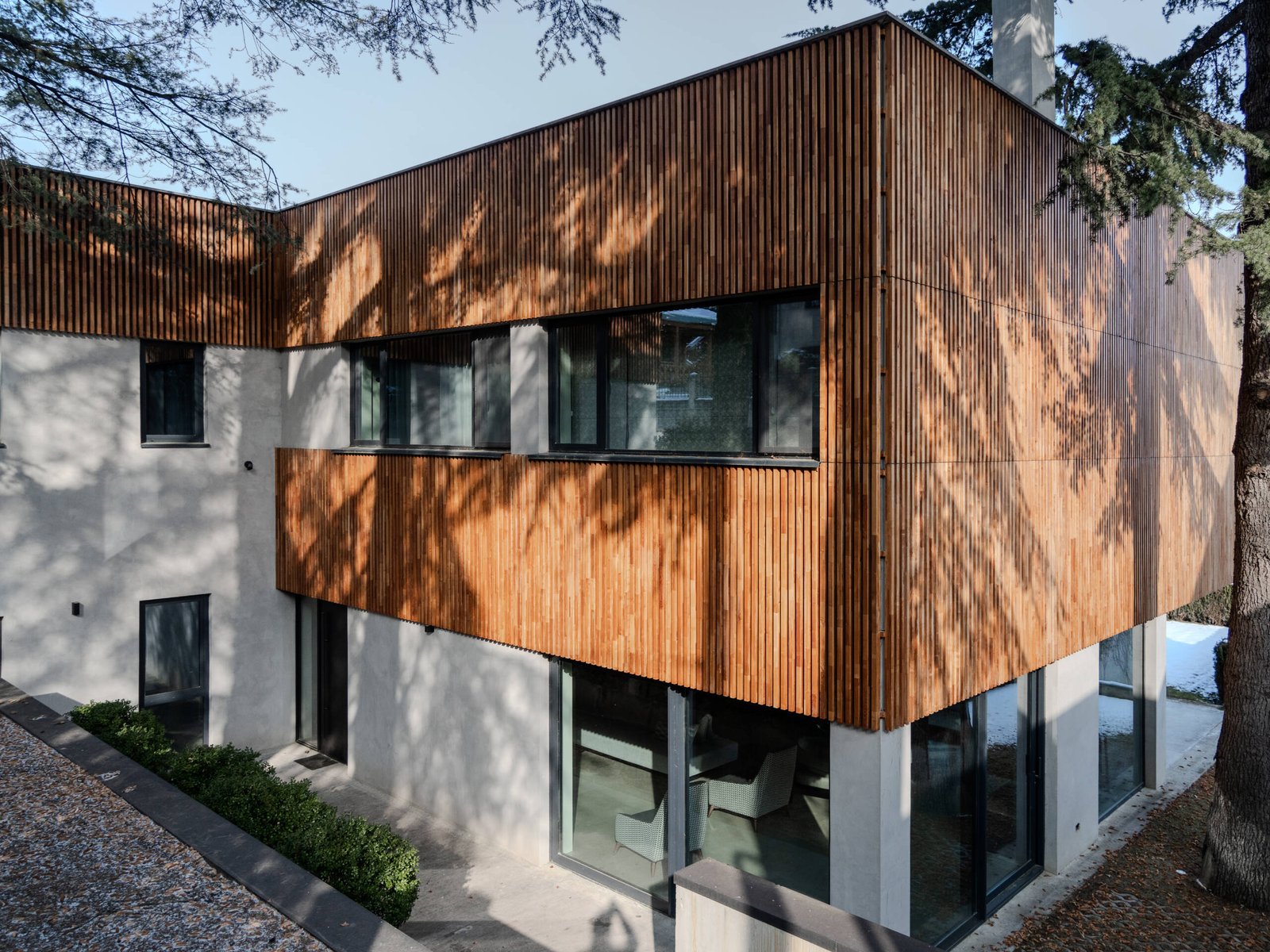
Materially, the house expresses a refined balance between solidity and warmth. The primary structure is formed by concrete walls, providing strength, durability, and a modern architectural foundation. However, these concrete surfaces are clad with wooden battens, creating a distinctive architectural skin that softens the building’s appearance and allows it to blend more naturally into its forested context. The wooden cladding introduces texture, rhythm, and warmth, establishing a dialogue between the built form and the organic surroundings of pine trunks and branches.
The façade composition is further enhanced by the extensive use of glazing. Large windows wrap around three sides of the building, maximizing natural daylight and strengthening the connection between indoor spaces and the landscape outside. These openings significantly improve the lighting conditions of the kitchen and common areas, creating bright, open interiors that feel closely linked to the outdoors. The transparency of the façade allows the changing qualities of light, weather, and vegetation to shape the atmosphere of the home, making nature an integral part of the architectural experience. Overall, this family house in Tskneti represents a thoughtful response to its exceptional setting. Through its terraced placement, dual-yard organization, careful orientation toward mountain views, and balanced material palette of concrete and wood, the residence achieves a harmonious integration of contemporary architecture with the historic summer cottage landscape. It offers a living environment defined by light, openness, and a constant dialogue with the natural beauty of the Caucasus region.


