Project About
The northern slope of Okroghana is characterized by its mild climate, gentle topography, and a culturally rich landscape that reflects both the natural beauty and the evolving architectural identity of the area. This unique setting provides an ideal environment for contemporary residential development, where architecture is expected not only to serve functional needs but also to respond sensitively to the surrounding terrain and vegetation. Within this context, the architectural bureau ab5, in collaboration with architect Eva Borer, designed a carefully composed two-storey residential house that overlooks the growing development of Okroghana’s northern hillside.
The house is positioned in a way that maximizes its panoramic views while maintaining a strong relationship with its immediate environment. Rather than dominating the landscape, the building is thoughtfully integrated into the existing natural setting, surrounded by gardens, deciduous trees, and a calm residential atmosphere. The design approach emphasizes harmony between architecture and nature, allowing the building to become part of the broader cultural landscape rather than an isolated object.
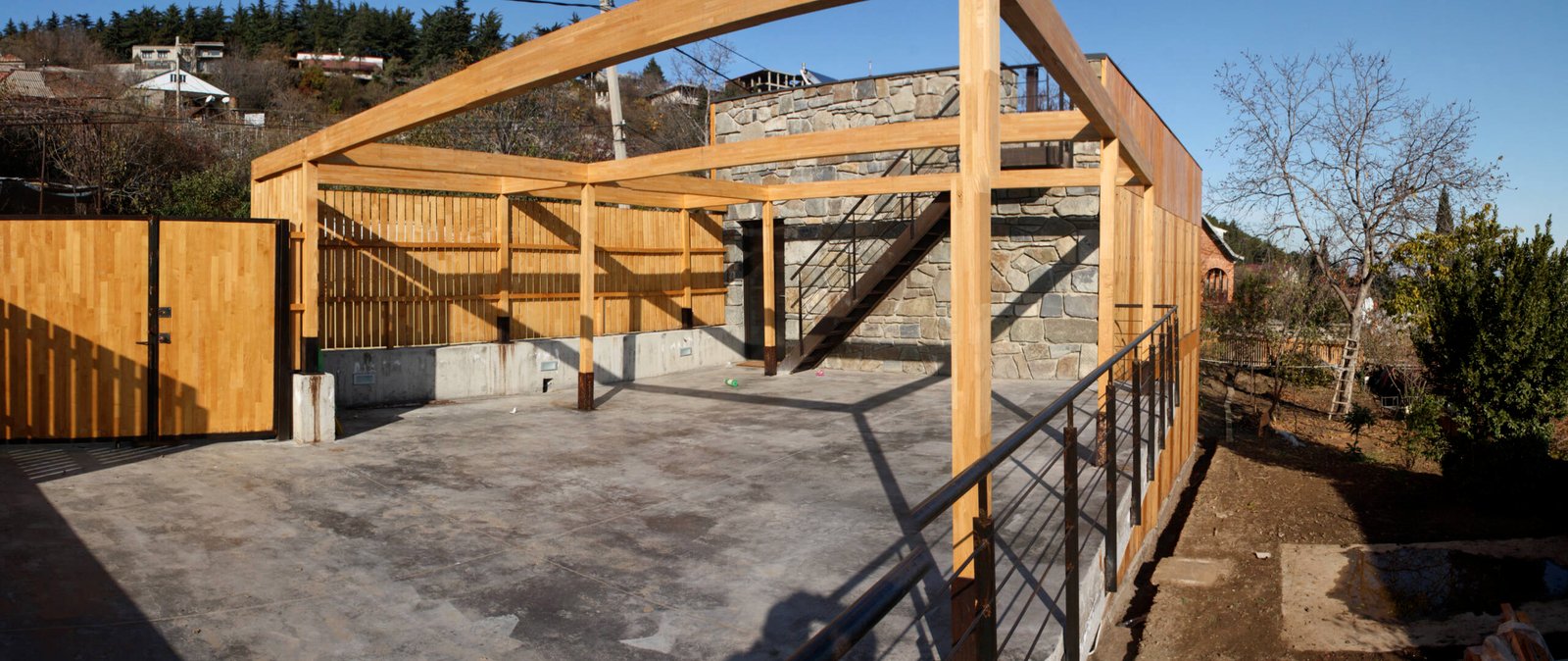
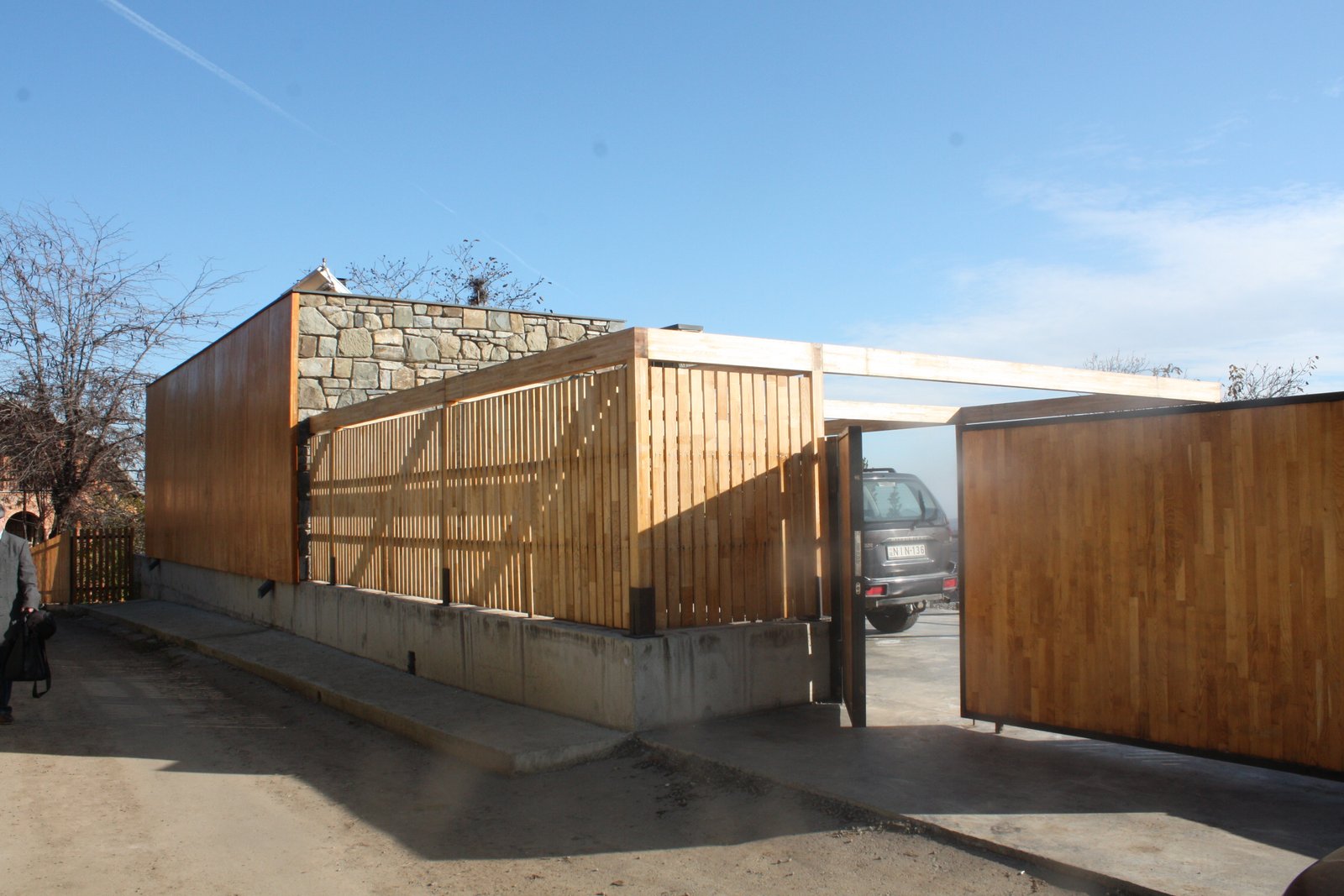
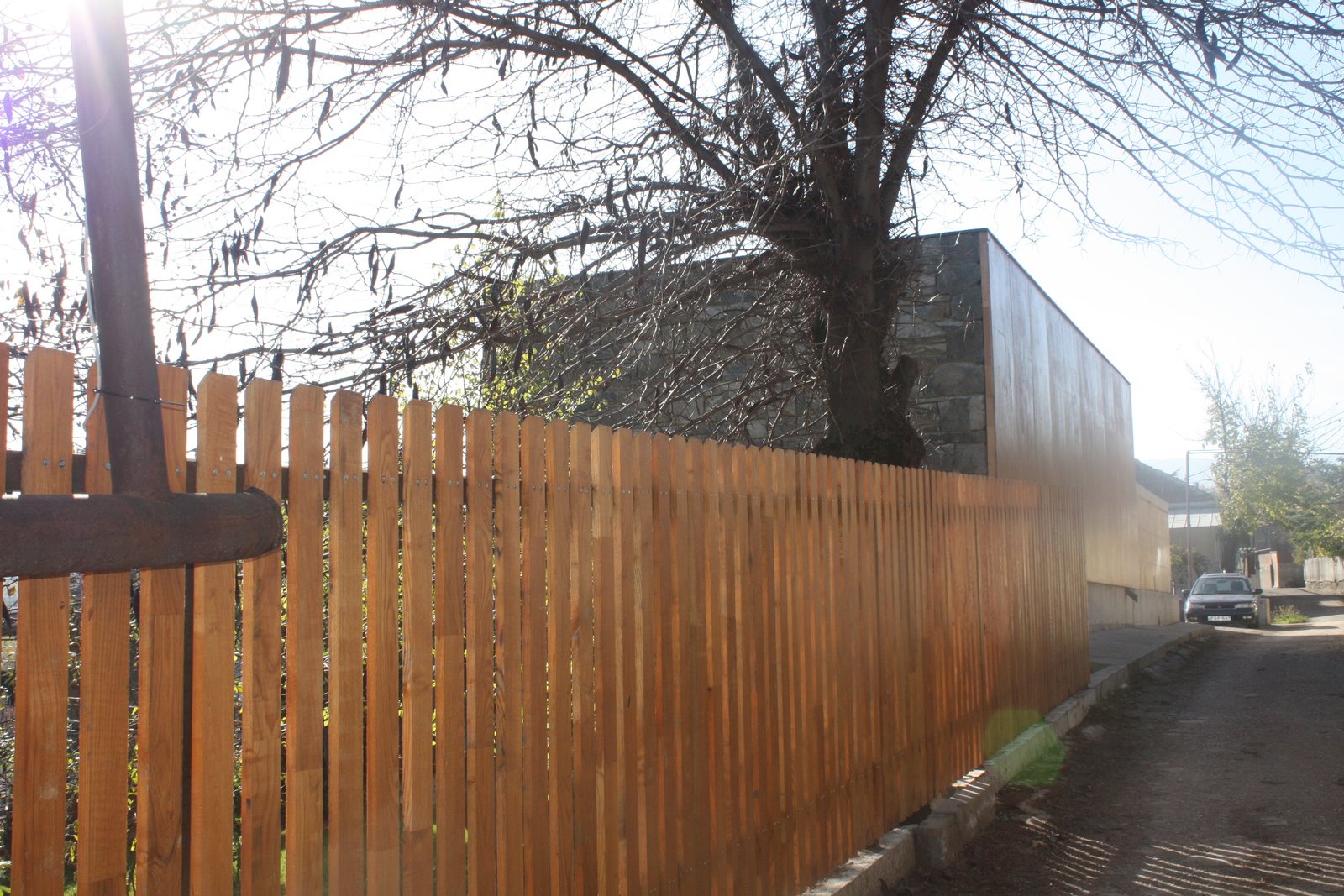
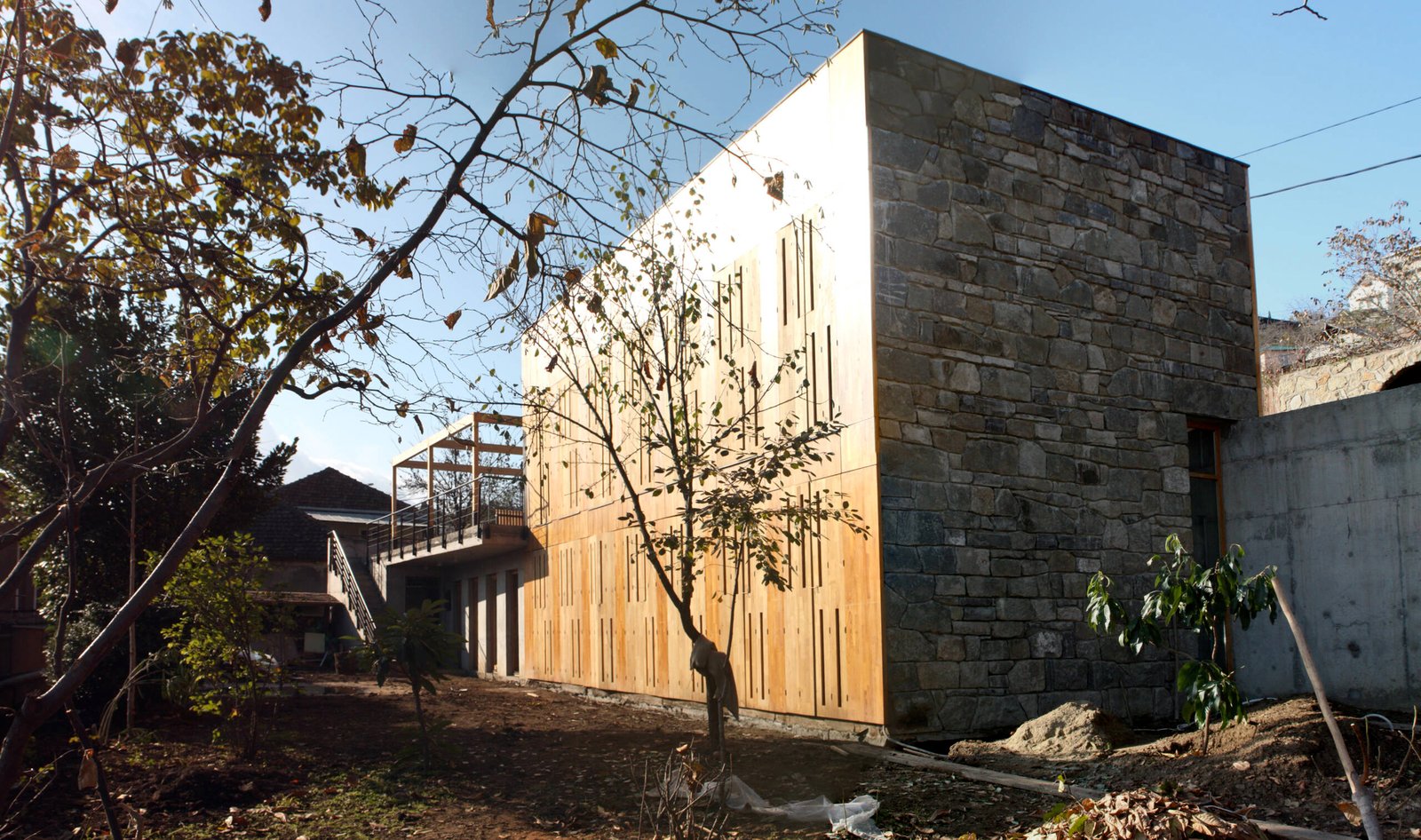
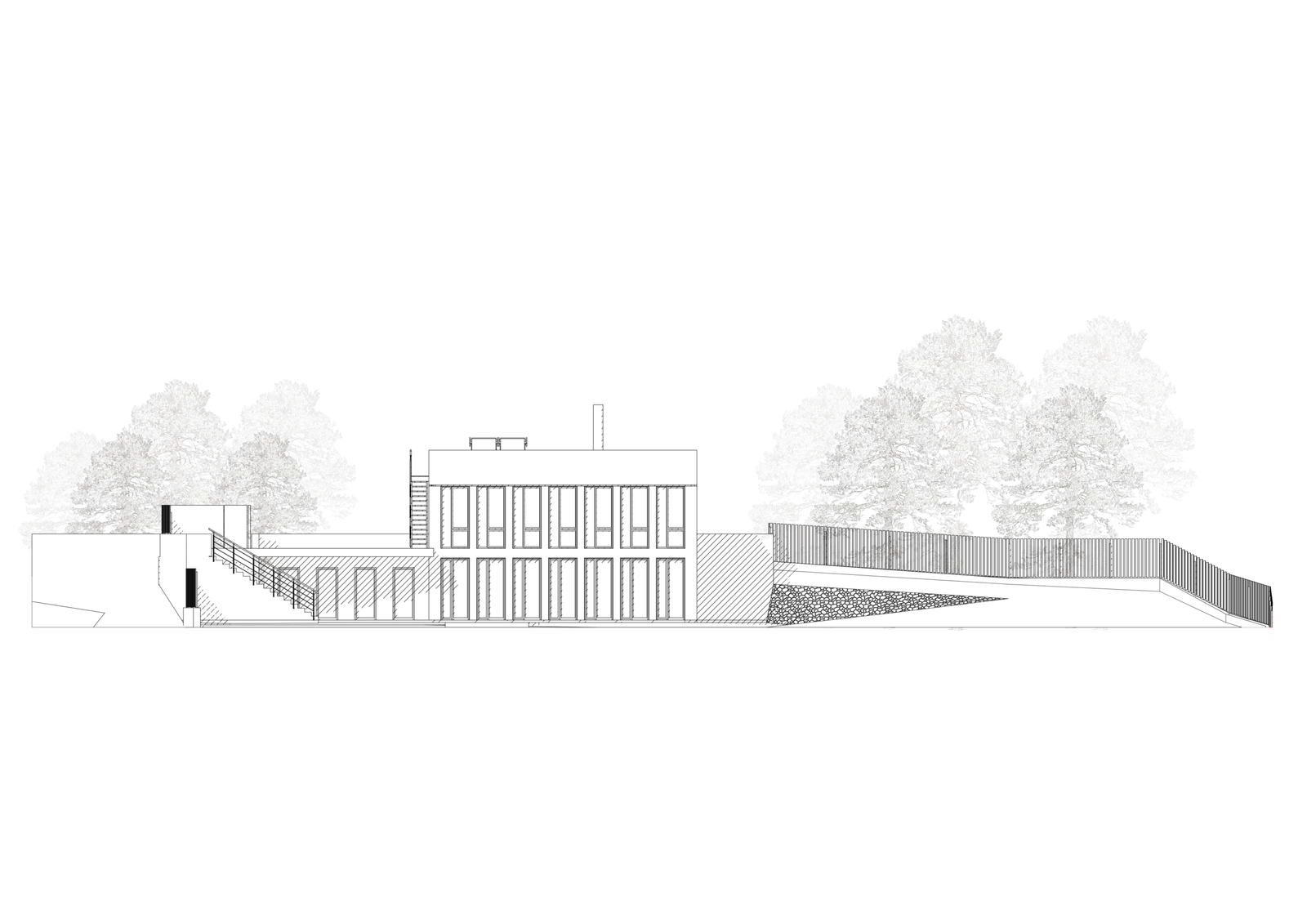
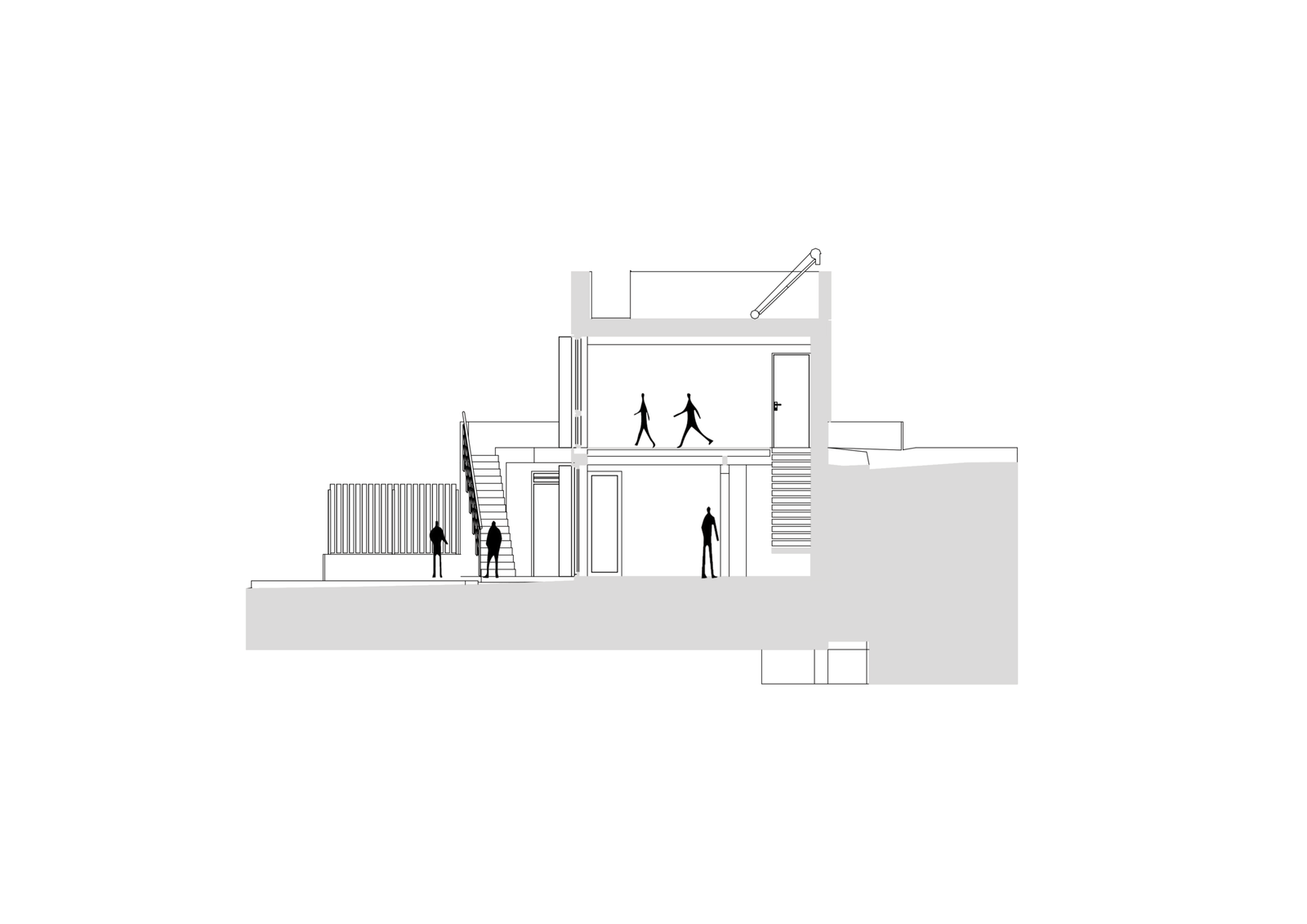
One of the most distinctive aspects of the project is its volumetric clarity. The building’s massing creates a cohesive architectural form that aligns closely with the road, establishing a clear presence within the urban fabric. At the same time, the structure adapts to the sloping site conditions, resulting in a dynamic spatial experience. From the Zurich Street side, the house appears as a modest single-storey volume, maintaining a low profile and respecting the scale of the street. However, as the terrain descends toward the yard, the building unfolds into a two-storey structure, revealing its full spatial complexity and creating a more open relationship with the private garden areas.
This dual perception of the house—compact and restrained from the street, yet expansive and open toward the yard—demonstrates the architects’ sensitivity to both public and private realms. The street façade contributes to the continuity of the neighborhood, while the yard façade opens up to light, greenery, and outdoor living spaces. This gradual transition between the two sides enhances the building’s connection to its site and reinforces its role as a mediator between landscape and habitation.
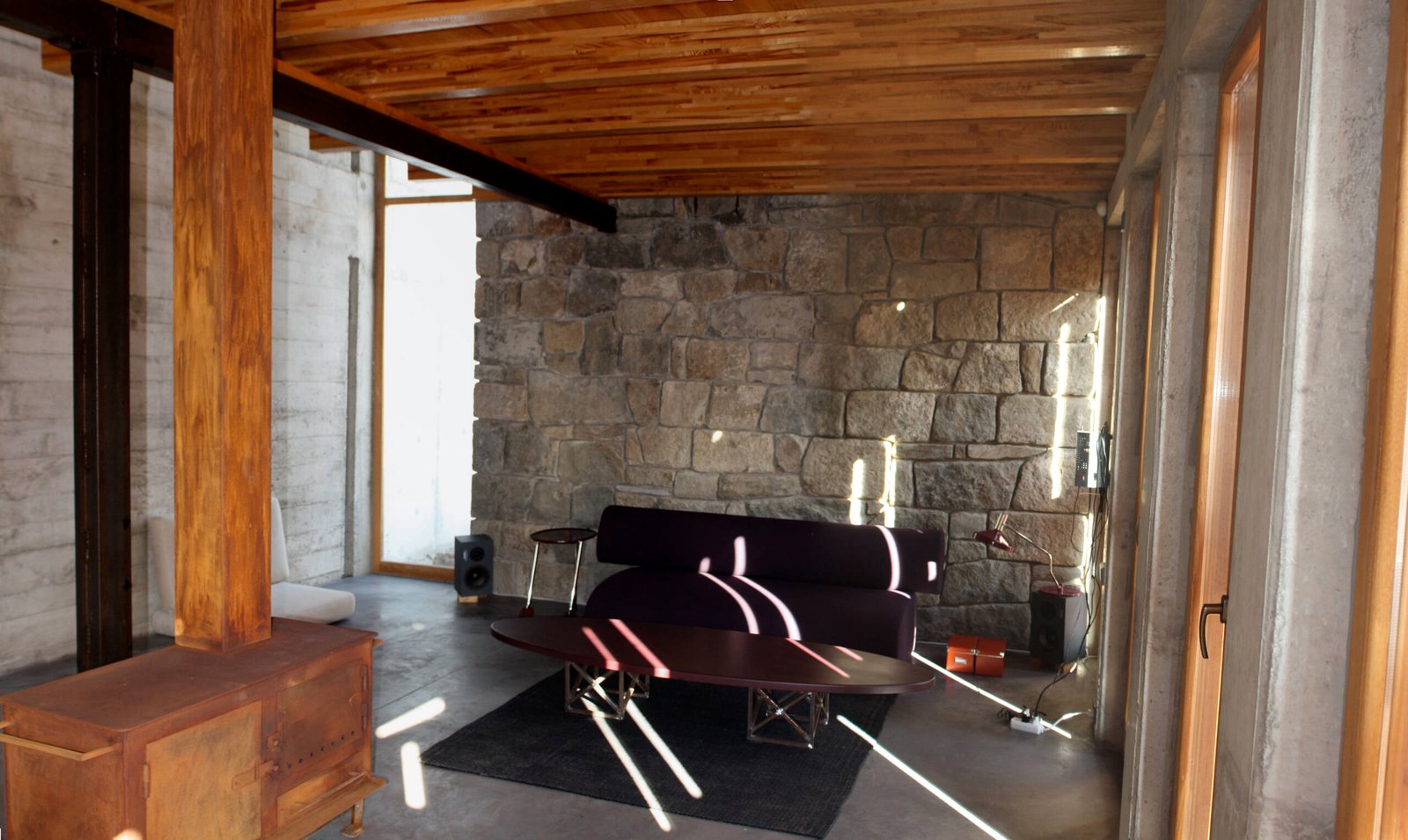
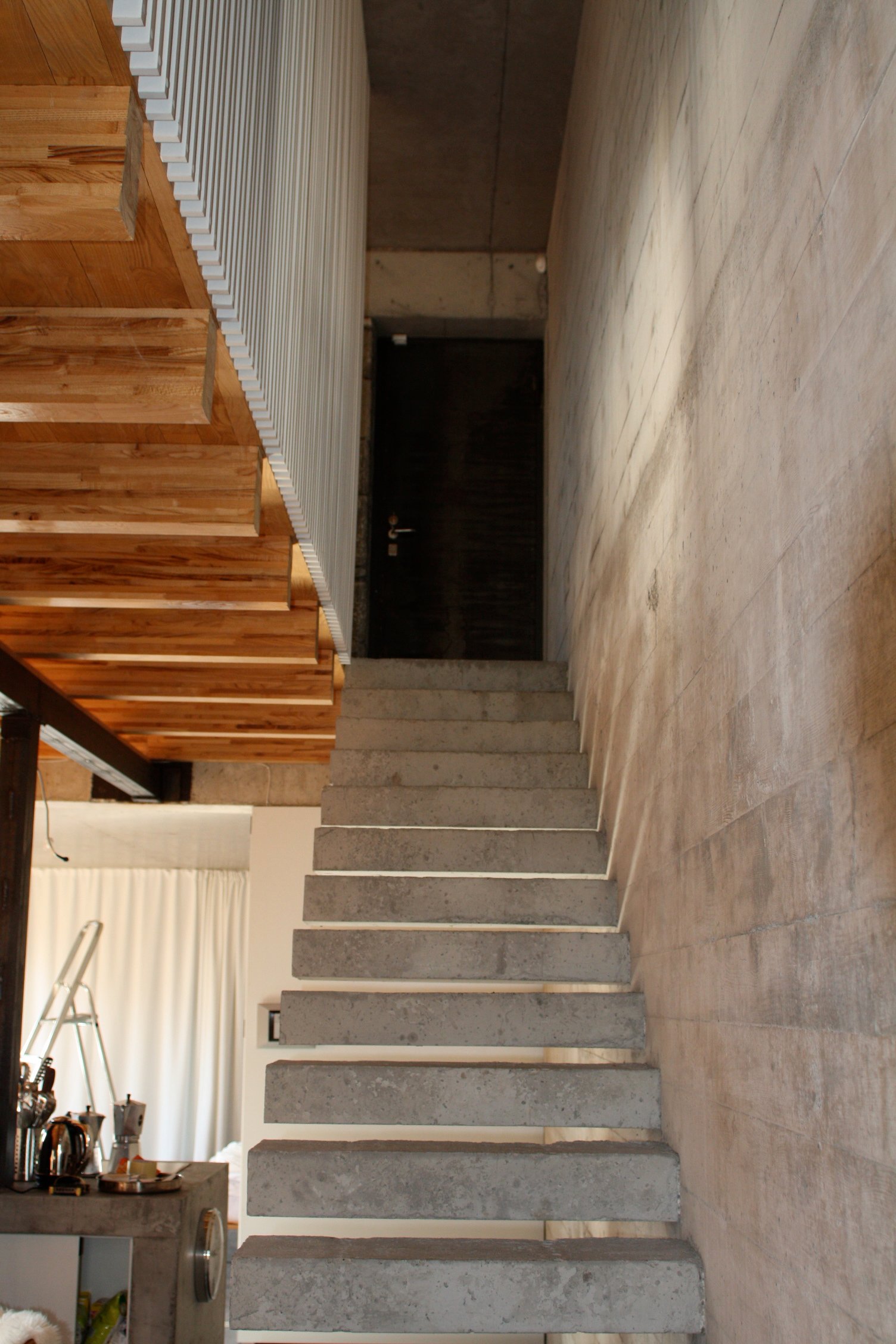
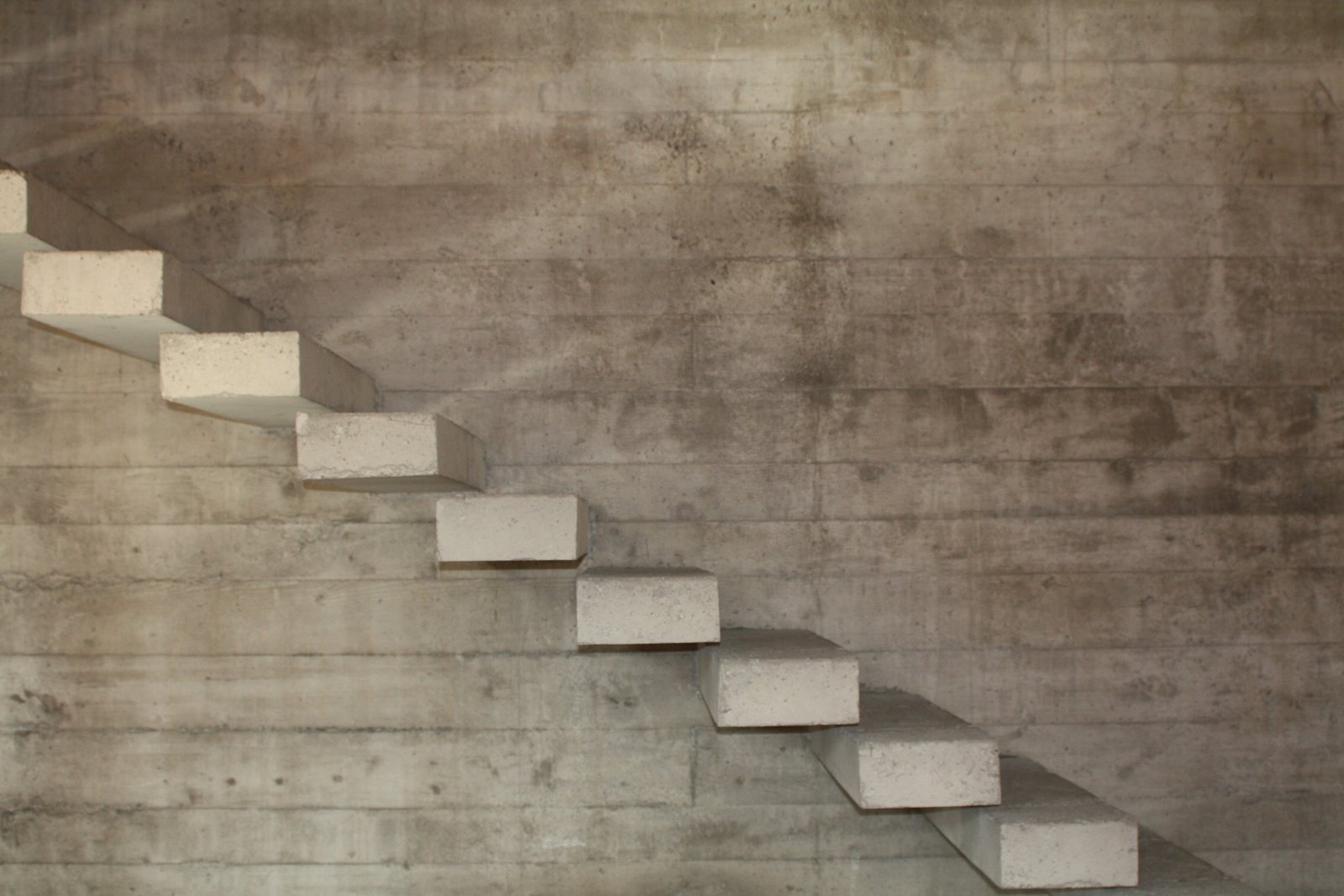
Structurally, the building is conceived as a monolithic reinforced concrete frame, providing durability, stability, and a strong architectural foundation. Reinforced concrete is used not only for the primary structural system but also in combination with wooden intermediate ceilings, creating a balanced interplay between robust construction and warm interior materiality. This hybrid structural approach supports both functional performance and aesthetic expression, ensuring long-term resilience while offering comfort and atmosphere within the living spaces.
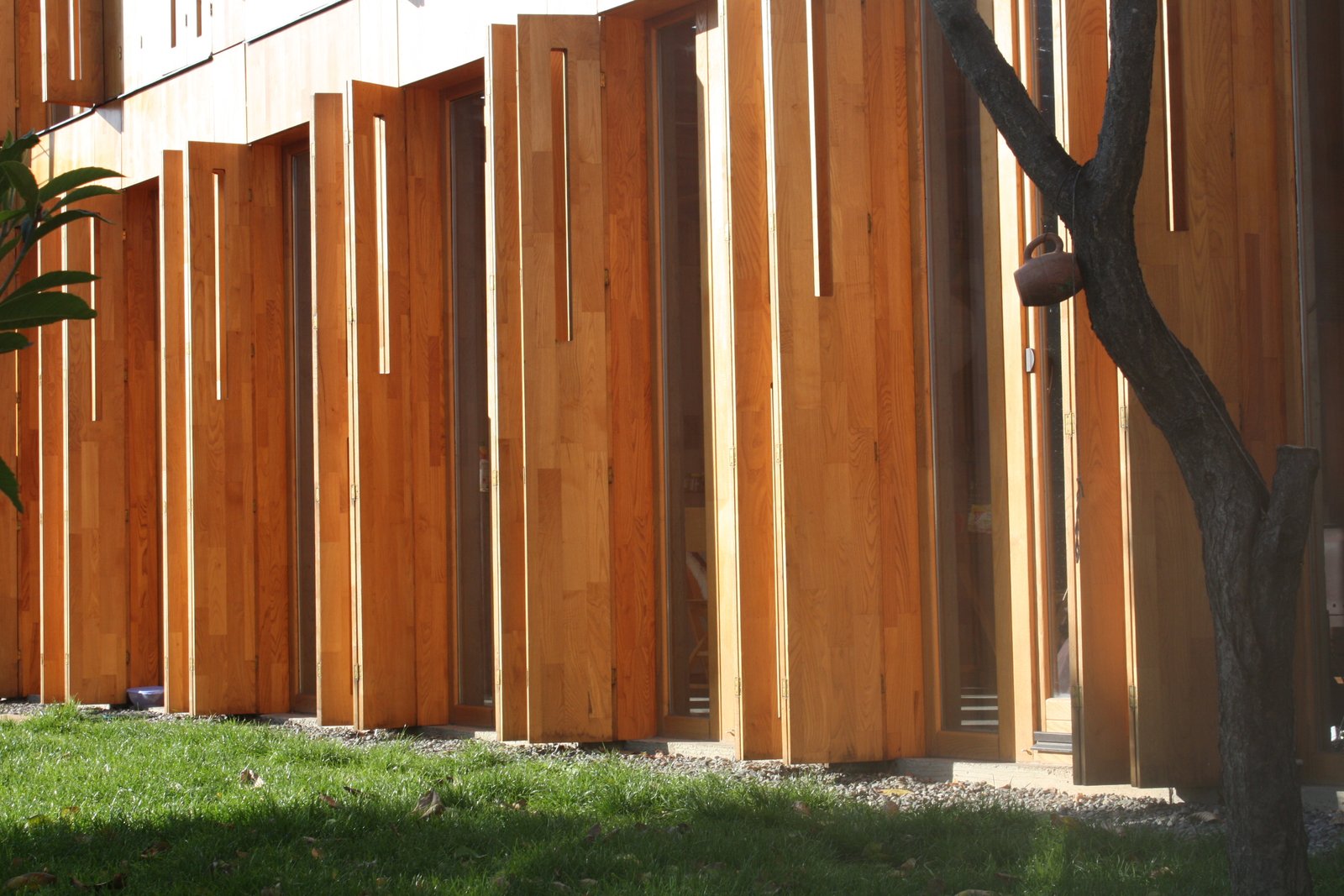
The façade design further reflects this combination of solidity and natural warmth. A carefully selected palette of materials—including natural stone, exposed concrete, and wooden panel cladding—creates a layered architectural identity that resonates with the surrounding landscape. The natural stone elements anchor the building visually to the earth, while concrete surfaces express the building’s modern character and structural honesty. In contrast, the wooden cladding introduces a softer, tactile quality that complements the greenery of the gardens and trees.
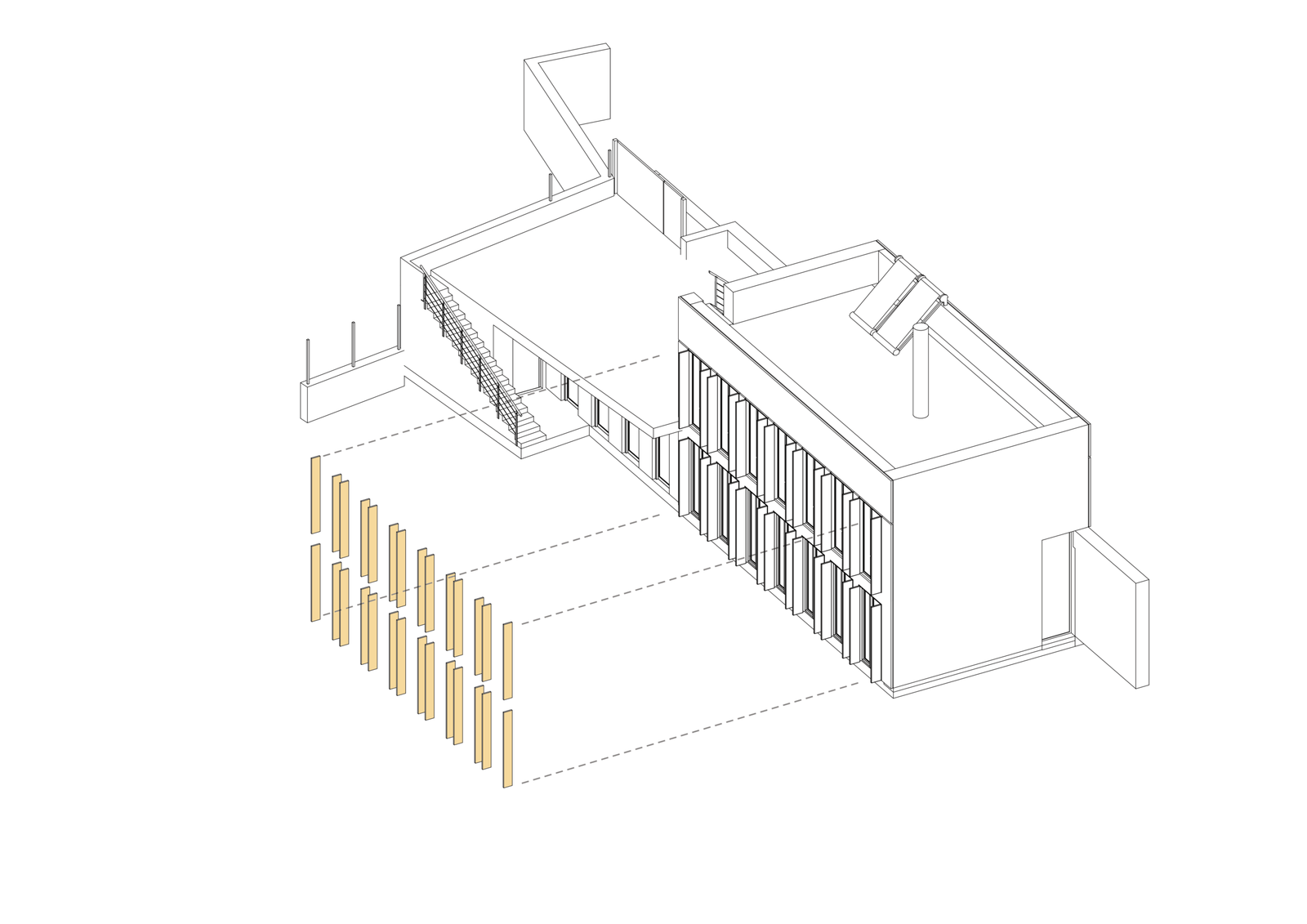
A particularly prominent and expressive detail of the building is the use of wooden shutters. These shutters add both functional and aesthetic value, serving as adjustable elements that control sunlight, privacy, and ventilation. At the same time, they contribute a sense of movement and dynamism to the façade facing the yard. Depending on their position—open, partially closed, or fully shut—the shutters transform the appearance of the building throughout the day, creating an ever-changing architectural rhythm.
This interplay of static and dynamic components enhances the building’s character, making it responsive not only to environmental conditions but also to the daily life of its inhabitants. The shutters become an architectural feature that animates the façade and reinforces the relationship between interior and exterior spaces.
Overall, the residential house designed by ab5 and Eva Borer stands as a refined example of contemporary architecture that is deeply rooted in its context. Through its sensitive integration into the northern slope of Okroghana, its thoughtful response to topography, and its balanced use of materials and details, the project achieves a harmonious dialogue between modern design and the natural cultural landscape. It offers both a comfortable dwelling and an architectural statement that respects and enhances its surroundings.